
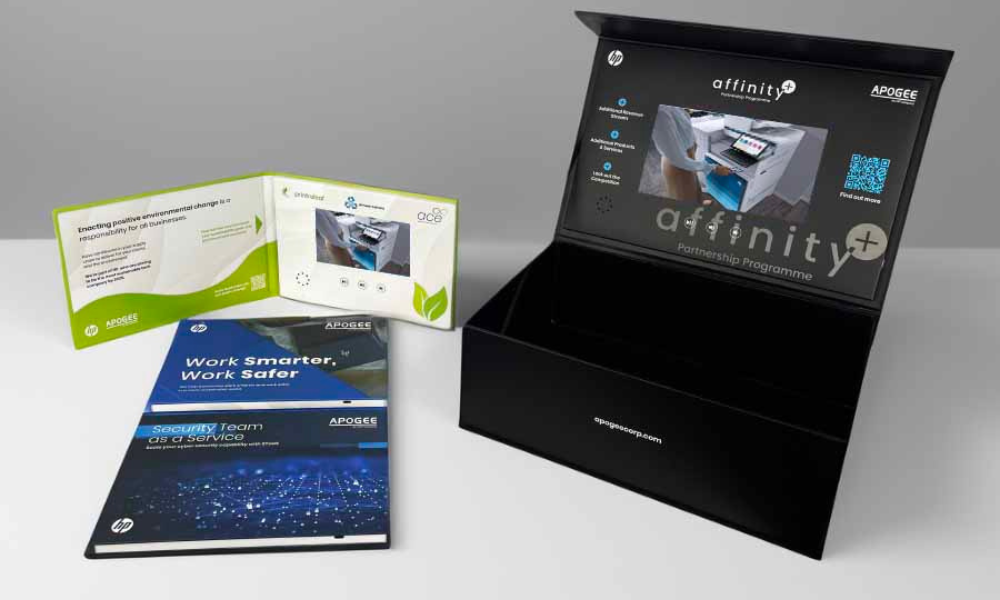
For years, brands have framed physical and digital marketing as a trade-off. Budgets are split. Teams are siloed. Strategies compete for attention.
In 2026, the strongest brands have moved on from this debate entirely. They no longer ask physical or digital — they design for both, together.
The False Choice Brands Still Make
Digital marketing is fast, measurable, and scalable. Physical brand touchpoints are tangible, emotional, and long-lasting. Too often, brands treat these strengths as mutually exclusive.
This leads to familiar problems:
- Digital campaigns that promise more than the physical experience delivers
- Packaging and merchandise that feel disconnected from online branding
- Clothing and gifting that don’t reflect current campaigns or messaging
In 2026, this disconnect is increasingly obvious to customers.
Why Digital Alone Isn’t Enough Anymore
Digital channels remain essential, but they’re no longer sufficient on their own. Rising costs, declining attention spans, and platform dependence have changed the economics of growth.
Physical brand touchpoints help rebalance this by:
- Extending the life of digital campaigns
- Creating moments customers can interact with offline
- Reinforcing brand identity through repeated exposure
- Making digital messaging feel more credible
A brand seen on a screen is easy to ignore. A brand held, worn, or kept is harder to forget.
Physical Touchpoints Amplify Digital Performance
In 2026, the most effective brands use physical assets to support digital outcomes. Packaging becomes a continuation of the website. Merchandise supports social storytelling. Clothing turns customers and teams into brand advocates.
When aligned properly:
- Unboxings drive organic social content
- Merchandise increases brand recall beyond campaigns
- Physical experiences validate digital promises
The result isn’t just better branding — it’s better performance across channels.
Integration Is the Real Advantage
The brands pulling ahead in 2026 aren’t spending more everywhere. They’re integrating better.
They design physical and digital touchpoints together, using each to strengthen the other. This creates consistency, clarity, and trust — qualities that are increasingly rare and increasingly valuable.
The future isn’t physical or digital. It’s physical and digital, working as one system.
